Loading details…

Artist
Erik Satie
12+ albums
ClassicalpianoImpressionistfrenchcomposers
about
Eric Alfred Leslie Satie (17 May 1866 – 1 July 1925), known as Erik Satie, was a French composer and pianist. Born in Honfleur to a French father and a British mother, he studied at the Paris Conservatoire but did not complete his diploma. In the 1880s, he worked as a pianist in café-cabarets in Montmartre, Paris, and began composing works primarily for solo piano, including "Gymnopédies" and "Gnossiennes". He also wrote music for a Rosicrucian group with which he was briefly affiliated. After a period of limited compositional output, Satie enrolled at the Schola Cantorum in Paris as a mature student, where he found greater academic success than he had at the Conservatoire. Around 1910, he became an influential figure among younger composers drawn to his distinctive approach to music. He was associated with the group Les Six and collaborated with Jean Cocteau on the ballet "Parade" (1917), produced by Serge Diaghilev, with sets and costumes by Pablo Picasso and choreography by Léonide Massine. Satie's work contributed to a shift in French music away from post-Wagnerian and impressionist styles toward a more concise and restrained aesthetic. Composers such as Maurice Ravel, Claude Debussy, and Francis Poulenc acknowledged his influence, and later musicians including John Cage and John Adams have also cited him as an inspiration. His compositions often feature unresolved harmonies and unorthodox structures, such as the omission of bar-lines in pieces like the "Gnossiennes". H
top songs
albums

Erik Satie & Friends
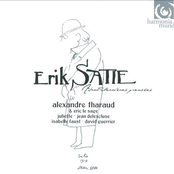
Satie: Avant-dernières pensées (Bonus Track Version)
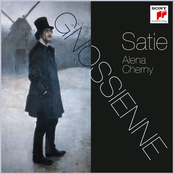
Gnossienne No. 1

Piano Dreams

SATIE: Piano Works (Selection)
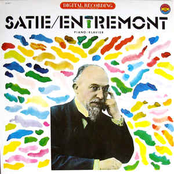
Entremont Plays Satie

Satie: The Magic of Satie
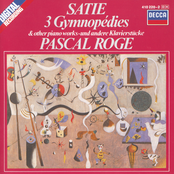
Satie: 3 Gymnopédies; 6 Gnossiennes etc.
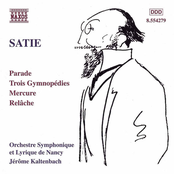
Satie: Parade, Gymnopédies, Mercure & Relâche

Satie: Complete Piano Works, Vol. 2/2

Satie: Masterpieces

Gymnopédies