Loading details…

Artist
Clarence Williams' Washboard Four
12+ albums
20sdixieland1920sjazz
about
Clarence Williams (October 8, 1898 – November 6, 1965) was an American jazz pianist, composer, promoter, vocalist, theatrical producer, and publisher. Williams was born in Plaquemine, Louisiana, ran away from home at age 12 to join Billy Kersand's Traveling Minstrel Show, then moved to New Orleans. At first Williams worked shining shoes and doing odd jobs, but soon became known as a singer and master of ceremonies. By the early 1910s he was a well regarded local entertainer also playing piano, and was composing new tunes by 1913. Williams was a good business man and worked arranging and managing entertainment at the local African-American vaudeville theater as well as various saloons and dance halls around Rampart Street, and clubs and houses in Storyville. Williams started a music publishing business with violinist/bandleader Armand J. Piron 1915, which by the 1920s was the leading African-American owned music publisher in the country. He toured briefly with W.C. Handy, set up a publishing office in Chicago, then settled in New York in the early 1920s. In 1921, he married blues singer and stage actress Eva Taylor with whom he would frequently perform. He supervised African-American recordings (the 8000 Race Series) for New York offices of Okeh phonograph company in the 1920s in the Gaiety Theatre office building in Times Square.[1] He recruited many of the artists who performed on that label. He also recorded extensively, leading studio bands frequently for OKeh, Columbia
why this is interesting
# Why This Recording Matters This 1920s ensemble captures a pivotal moment in American music when jazz was still crystallizing its forms. Williams orchestrates the washboard—typically a laundry tool—as a rhythmic voice equal to piano and horns, revealing how early jazz musicians transformed domestic objects into sophisticated instruments. The recordings showcase Williams's skill as both composer and bandleader, demonstrating how small groups could achieve remarkable textural variety. Beyond technical innovation, these sides document the cultural bridge between ragtime and swing, preserving a sound that defined a transitional era. For anyone interested in understanding how jazz developed from its regional roots into a national phenomenon, these sessions offer essential evidence of creativity emerging from genuine experimentation
top songs
albums
▥
All Star Jazz Quartets 1928-1940 - Disc D
▥
Historic Jazz Recordings, Volume 1
▥
Historic Jazz Recordings, Volume 2
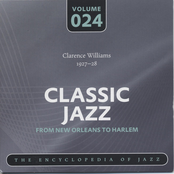
The Encyclopedia Of Jazz. Classic Jazz. Volume 024
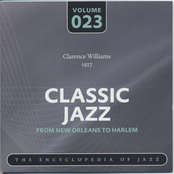
The Encyclopedia Of Jazz. Classic Jazz. Volume 023
▥
Dixieland of the 1920s
▥
Sentimental Journey 89
▥
OKeh
▥
Clarence Williams 1927
▥
Classic Jazz- The Encyclopedia of Jazz - From New Orleans to Harlem, Vol. 24
▥
The Very Best New Orleans Jazz
▥
Clarence Williams 1927-28