Loading details…

Artist
Cheo Marquetti
12+ albums
cubaworldmontunoAllguajira
about
José Marcelino Díaz Marquetti (April 26, 1909 – March 29, 1967), better known as Cheo Marquetti, was a renowned Cuban son vocalist and songwriter. Marquetti was born at 277 Velarde Street, El Cerro, Havana,[1] Cuba. He was the son of Mercedes Díaz Campos and David "El Lucumí" Marquetti Suárez,[2] an Abakuá member of Los Chinos Buenos, a mixed band whose members dressed as Chinese.[3] He grew up in the Havana neighborhoods of San Juan de Dios and Cayo Hueso. He started his career in 1926 with a sexteto, Minerva. He joined the Belén Puig Orchestra and the Ernesto Muñoz Conjuncto in 1930 as singer of danzons. He then joined a number of septetos, among them Septeto Cauto, led by Manuel 'Mozo' Borgella with whom he recorded in 1940 (including the song Efi Embemoro - the first Afro-Ñáñigo song to be recorded; Cheo Marquetti previously had recorded this tune in a duet setting with Bienvenido Granda in 1936, accompanied by Septeto Nacional de Ignacio Piñeiro). This was followed by stints with Septeto Hatuey, Septeto Facenda and the famous Septeto Habanero. He is also said to have been a member of Septeto Cuba, Alabama de Abelardo Barroso, Jóvenes del Cayo, Dandy del 40, La Sonora Piñón and Septeto Mora. In an effort to achieve wider recognition he left Cuba for Mexico in the mid forties. Only mildly successful, he returned in 1953. Back in Havana he joined Orquesta Sensación, led by Rolando Valdés (to briefly replace the much more famous sonero Abelardo Barroso). This engagement w
you might also explore
▤Books
▧Games
▣Movies
▦TV
top songs
albums
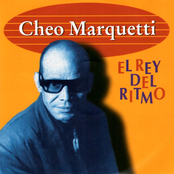
El Rey del Ritmo
▥
Cuba Mi Amor
▥
El Son de Cuba
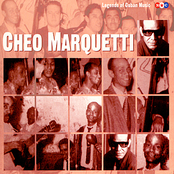
Cheo Marquetti
▥
Cuba Libre [PMF]
▥
Region Matancera
▥
The music of Cuba - Cuban Soneros, Vol. 1 / 1934 - 1957
▥
Cuban Pearls Vol. II - Soneros de Ayer y de Hoy
▥
Buena Vista Nights - The Best Of Cuba
▥
Navidades Cubanas Bailables
▥
Cuban Pearls Vol. I - Una Noche en la Habana
▥
Perlas Cubanas: Navidad en Cuba