Loading details…

Artist
Caterina Assandra
9+ albums
composerorganitalianmotetsorgan continuo
about
Caterina Assandra (c. 1590 – after 1618) was an Italian composer and Benedictine nun. She was born in Pavia, Italy. She wrote a number of motets, as well as a number of organ pieces, written in German tablature. She studied counterpoint with the possibly German Catholic exile Benedetto Re, or Reggio, one of the leading teachers at Pavia Cathedral, who dedicated a piece to her in 1607. Her musical talents were noted by the publisher Lomazzo early in her career, in the dedication of G.P. Cima's works. In 1609, Assandra took vows and entered the Benedictine monastery of Saint Agata, in Lomells, in the Lombard region of northern Italy, adopting “Agata” as her religious name. Here, she continued composing, including a collection of motets in the new concertato style in Milan in 1609, an imitative eight-voice Salve Regina in 1611, and a motet, Audite verbum Dominum, for four voices in 1618. Assandra’s motets were among the first in the Roman style to be published in Milan, as Borsieri noted. Assandra composed both highly traditional pieces and more innovatory works. One of these innovatory works is Duo seraphim. Her motet O Salutaris hodie, included in Motetti op. 2, was one of the first pieces to include ‘violone’. She became famous as a composer and organist and some of her works were published during her lifetime. User-contributed text is available under the Creative Commons By-SA License; additional terms may apply.
top songs
albums
▥
Il canto delle Dame: compositrices du Seicento
▥
Rosa Mistica - Musiche delle monache lombarde del Seicento
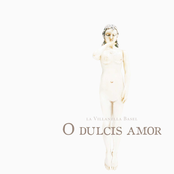
O dulcis amor
▥
Rosa Mistica: Music In The Lombard Convents
▥
Scintillate amicae stellae - Il Natale nei conventi italiani tra Cinquencento e Seicento
▥
Il Canto delle Dame
▥
Ambronay Editions 5 ans : Qobuz
▥
Night Tracks - A meditative moonlight soundtrack
▥
Rosa Mistica: Musiche delle monache lombarde del '600