Loading details…

Artist
Buster Bailey
12+ albums
jazzswingclarinetdixielandclassic jazz
about
William C. "Buster" Bailey (July 19, 1902 – April 12, 1967) was a jazz musician specializing in the clarinet, but also well versed on saxophone. Originally from Memphis, Tennessee, Bailey was one of the most respected session players of his era. Buster Bailey was a master of the clarinet and was educated on the instrument by classical teacher Franz Schoepp, the man who taught Benny Goodman. Bailey got his start with W.C. Handy’s Orchestra in 1917 when he was just fifteen years old. After two years of touring with Handy, Bailey quit the orchestra while the band was in Chicago. In 1919, Bailey joined Erskine Tate’s Vendome Orchestra and remained with Tate until 1923 when he joined up with Joe "King" Oliver. As a member of King Oliver’s Creole Jazz Band, Bailey met and became friends with Louis Armstrong, who was also a member of the band at that time. In 1924, Armstrong left King Oliver’s Jazz Band to join Fletcher Henderson’s Orchestra in New York. Within a month Armstrong extended an invitation for Buster Bailey to join him as a member of Henderson’s band. Bailey accepted and moved to New York City. In New York during the late 1920s, Buster Bailey became a highly respected sideman with Perry Bradford and others, and appeared on numerous recordings playing both the clarinet and the soprano saxophone. Most notably Bailey performed on a number of Clarence Williams albums. In 1927 he left Fletcher Henderson and undertook a tour of Europe with Noble Sissle’s Orchestra. After his
top songs
albums
▥
20.3017-HI (2of2) - Cuttin' Out
▥
Master Clarinetist

The Ultimate Jazz Archive 2 (4 Of 4)
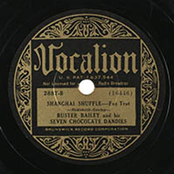
Shanghai Shuffle
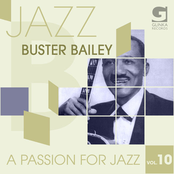
A Passion for Jazz, Vol. 10
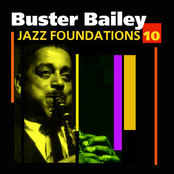
Jazz Foundations Vol. 10
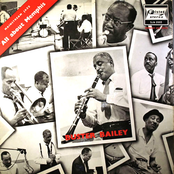
All About Memphis
The Ultimate Jazz Archive
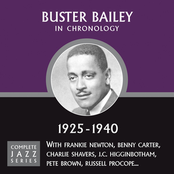
Complete Jazz Series 1925 - 1940

Buster Bailey's Seems Like A Month Of Sundays (Since I Saw You Saturday Night)
▥
Reefer Blues: Vintage Songs About Marijuana
▥
Summer Jam