Loading details…

Artist
Bernd Alois Zimmermann
12+ albums
contemporary classicalgermancomposerClassicalAvant-Garde
about
Born in Cologne, Germany in 1918. Enigmatic and difficult to categorise, Zimmerman was an early exponent of the stylistic pluralism so prevalent in what is now labelled post-modernism, but which, during his lifetime, was not considered to occupy the vanguard of the new. He studied at Bonn, Konigsdorf and Berlin Universities while working as a labourer and playing for dance bands, and later taught at Cologne University and Hochschule. His music made use of electronics, serialism, and quoted freely and poignantly from the music of others. He is highly regarded among composers, yet largely neglected by biographers of 20th century musical history. His most successful work was the opera Die Soldaten (1958-60, revised 1963-4). Profoundly religious and a lifelong depressive, Zimmerman committed suicide in 1970, five days after completing his final piece, "Ich wandte mich um und sah alles Unrecht das geschah unter der Sonne". User-contributed text is available under the Creative Commons By-SA License; additional terms may apply.
top songs
albums
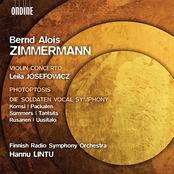
Zimmermann: Violin Concerto, Photoptosis, Die Soldaten Vocal Symphony
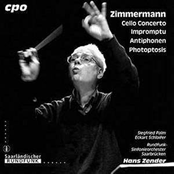
Zimmermann: Cello Concerto - Impromptu - Antiphonen - Photoptosis
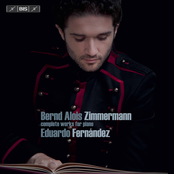
Zimmermann: Complete Works for Piano
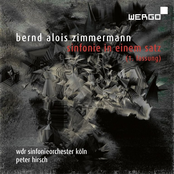
Zimmermann: Sinfonie in einem Satz (1. Fassung)
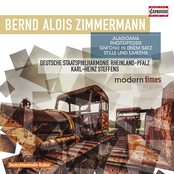
Zimmermann: Alagoana, Sinfonie in einem Satz, Photoptosis & Stille und Umkehr
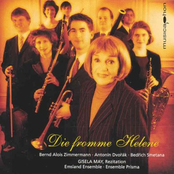
Zimmermann, B.A.: Fromme Helene (Die) / Rheinische Kirmestanze / Smetana, B.: The Bartered Bride
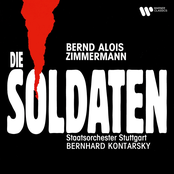
Zimmermann: Die Soldaten
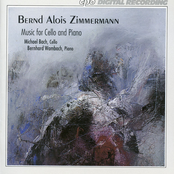
Zimmermann: Music for Cello and Piano
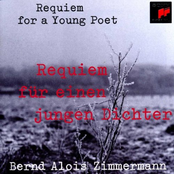
Requiem für einen jungen Dichter
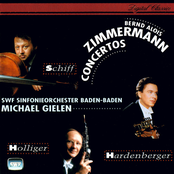
Zimmermann: Cello, Oboe and Trumpet Concertos; Canto di speranza
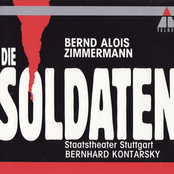
Die Soldaten
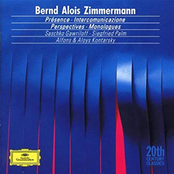
Zimmermann: Présence; Perspektiven; Intercomunicazione; Monologe