Loading details…

Artist
Beale Street Sheiks
12+ albums
bluesguitareverythingmemphis20s
about
The Beale Street Sheiks By the turn of the 19th century, at the age of 12, Frank Stokes worked as a blacksmith, traveling the 25 miles to Memphis on the weekends to sing and play guitar with Dan Sane, with whom he developed a long-term musical partnership. Together, they busked on the streets and in Church's Park (now W. C. Handy Park) on Memphis' Beale Street. Frank Stokes (January 1, 1888 – September 12, 1955) was an American blues musician, songster, and blackface minstrel, who is considered by many musicologists to be the father of the Memphis blues guitar style Stokes was born in Shelby County, Tennessee, in the largest Southern vicinity Whitehaven, located two miles north of the Mississippi line. He was raised by his stepfather in Tutwiler, Mississippi, after the death of his parents. Stokes learned to play guitar as a youth in Tutwiler, and, after 1895, in Hernando, Mississippi, which was home to such African American guitarists as Jim Jackson, Dan Sane, Elijah Avery (of Cannon's Jug Stompers), and Robert Wilkins. In the mid 1910s, Stokes joined forces with fellow Mississippian Garfield Akers as a blackface songster, comedian, and buck dancer in the Doc Watts Medicine Show, a tent show that toured the South. During this period of touring, Stokes developed a sense of show business professionalism that set him apart from many of the more rural, less polished blues musicians of that time and place. It is said that his performances on the southern minstrel and vaudeville
top songs
albums
▥
American Epic: The Collection
▥
Broadcasting the Blues: Black Blues in the Segregation Era (Compiled and Edited by Paul Oliver)
▥
The Roots of Rap
▥
The Roots Of Rap - 1920's and 30's
▥
100 1920s Blues Classics
▥
The Roots Of Rap: Classic Recordings From The 1920s & 30s
▥
The Early Roots Of Rock N' Roll
▥
The History Of Rhythm And Blues 1925 - 1942
▥
Rough Guide To Ragtime Blues
▥
Blue Images Presents 1920's Blues Classics
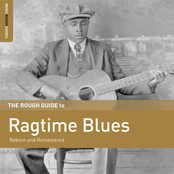
The Rough Guide To Ragtime Blues
▥
Out There 1: Wild & Wondrous Roots Of Rock 'n' Roll