Loading details…

Artist
André Hossein
12+ albums
SoundtrackacousticClassicalcomposerContemporary
about
French composer of Persian origins (b. 1905 in Samarkand; d. 1983 in Paris). His father was a rich merchant, and his mother initiated him in-to music. He was studying in Moscow when the 1917 Revolution occurred. He then left for Germany and continued his studies there, where his father wanted him to do medicine. Simultaneously, however, he studied music at the Stuttgart Conservatory, and later in Tübingen and Berlin, where he studied piano with Arthur Schnabel and composition with W. Klatt. He settled in France in 1927 and entered the Paris Conservatory, where he studied composition and orchestration with Paul Vidal (Mahámud, pp. 386-90; Akbarza@deh, p. 64). As a composer, Hossein was much inspired by traditional Persian music, and most of his works demonstrate this intellectual preoccupation. He knew the ta@r very well and could be considered one of the great ta@r players of his time. He began playing this instrument, ancestor to most string instruments, as a child, and later composed several works for it. He was a fairly prolific composer and was generally acclaimed by the critics. He also composed some twenty film scores, mostly for films directed by his son, Robert Hossein, the French actor and director. His orchestrated works include Symphonie des sables (1946), Symphonie Persepolis (1947), Symphonie Arya (1976), and three concertos for the piano (no. 1 "Capriccio," 1946; no. 2, 1946; and no. 3 "quasi una fantasia"). His works for the ballet were: Vers la lumieàre (1935)
top songs
albums
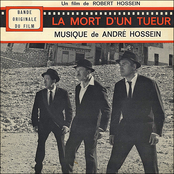
La mort d'un tueur
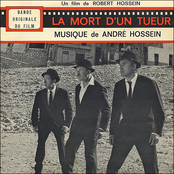
La mort d'un tueur - EP

Weirdsville - Planet Noir
▥
Balade à Saint-Germain, vol 6. Rue Saint Benoit: Nouvelle Vague
Film Noir
▥
Rhapsodie Persane
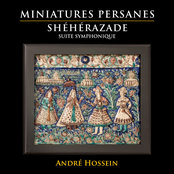
Miniatures persanes & shéhérazade suite symphonique
East of Melancholy
Shéhérazade (Original Movie Soundtrack)
▥
Epic & Dramatic
▥
J'ai tué Raspoutine (Original Motion Picture Soundtrack)
Les scélérats (Original Motion Picture Soundtrack, Mono Version)