Loading details…

Artist
Alphonse D'eve
3+ albums
Classicalbaroqueflemishrenaissance
about
Alphonse (Alphonsus) d'Eve (Heve, Heffe) is Flemish composer (born in Brussels, bap. 20 Aug 1666; died in Antwerp, bur. 10 Oct 1727). His father, Honoreus Eugenius d'Eve, was successively a singer (1652), lieutenant de musique (1662) and maître de musique (1664) at the royal chapel in Brussels. Alphonse became known about 1700, when his op.1 was announced, he composed an opera and was singing bass at the church of St Andries, Antwerp. He then worked as choirmaster at St James in Ghent (1703–18) and held the same post (on probation) at the church of Our Lady, Antwerp (1718–25), where he was succeeded by Willem de Fesch. Music inventories at Aalst, Antwerp, Ghent, Huy, Lier, Oudenaarde and Tongeren show that Eve’s sacred music circulated freely in the southern Netherlands. The mass in his op.1 was for long mistakenly attributed to Arne. His sacred music is in a concertante style and ranges from solo motets with modest instrumental accompaniment to a mass in B minor (1719), dedicated to the Antwerp chapter, for seven-part choir and soloists with nine instrumental parts. Eve’s style is markedly Italian (for example in its Corellian harmonies, sequential figuration and increasingly sectional structure, including da capo arias) but sometimes also decidedly French (for example in his five-part writing and in the Suite in D). His works are conceived with a strong feeling for rhetoric, and polyphony and homophony alternate. A particularly remarkable work is Exsurge psalterium, a dial
top songs
1
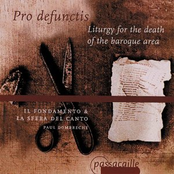
O Acerbi Motetus pro defunctis a 5 Voci et 6 Instrumenti
242(Sonata) - O Acerbi Choir
23Motetus pro defunctis - Audite B
14Motetus pro defunctis - Sicut desiderart cervus A-T-B
15Motetus pro defunctis - Circumdederunt me A-T
16Motetus pro defunctis - Quae in perpetuum A
17Motetus pro defunctis - O mortales A
18Motetus pro defunctis - Quoniam ignis B
19Motetus pro defunctis - Ignis et sulphur Choir
110Audite B
1