Loading details…

Artist
Albert Ketelbey
12+ albums
english
about
Albert William Ketèlbey (9 August 1875 – 26 November 1959) was an English composer, conductor and pianist. Ketèlbey was born in Alma Street in the Lozells area of Birmingham, England, the son of George Ketelbey (written with no accent), and Sarah Aston. At the age of eleven he wrote a piano sonata that won praise from Edward Elgar. Ketèlbey attended the Trinity College of Music in London, where he showed his talent for playing various orchestral instruments reflected in the masterfully colourful orchestration, especially of oriental inspiration, that became his trademark, and beat the runner-up, Gustav Holst, for a musical scholarship. He used the pseudonyms Raoul Clifford and Anton Vodorinski for some of his earlier works (some reference books mistakenly give Vodorinski as his true name and Ketèlbey as the pseudonym). His name is frequently misspelt Ketelby. Being appointed musical director of London's Vaudeville Theatre, Ketèlbey continued writing diverse vocal and instrumental music. Later, he became famous for composing lightweight, popular music, much of which was used as accompaniments to silent films, and as mood music at tea dances. Success enabled him to relinquish his London appointments. Once, whilst conducting a programme of his own music at a Royal Command Performance, Ketèlbey gave a second rendering of the State Procession movement of his Cockney Suite during the interval, at the request of King George V, who had arrived too late to hear it performed at the
top songs
albums
▥
Medytacja W Półcieniu
▥
150 nejslavnějších klasickyckých melodií

In A Monastery Garden: The Immortal Works Of Ketelbey
▥
Ketelbey - Jardin de un Monasterio, etc
▥
In a Monastery Garden
▥
Medytacja W Pó³cieniu
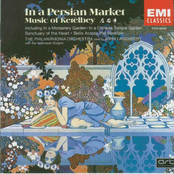
In a Persian Market
▥
Yes, M'Lord! Charming Souvenirs Inspired By Downton Abbey
▥
150 nejslavnìjších klasickyckých melodií
▥
cele mai iubite 150 de piese clasice
▥
150 nejslavnějších klasických melodií
▥
Elizabethan Serenade - The Best of British Light Music