Loading details…

Artist
Étienne Nicolas Méhul
12+ albums
ClassicalfrenchKlassik18th centuryromantic period
about
Etienne Nicolas Méhul (June 22, 1763 – October 18, 1817) was a French composer, "the most important opera composer in France during the Revolution." He was also the first composer to be called a "Romantic". Méhul was born at Givet in Ardennes to Jean-François Méhul - a wine merchant - and his wife Marie-Cécile (née Keuly). His first music lessons came from a blind local organist, but he had innate aptitude and was sent to study with a German musician and organist, Wilhelm Hanser, at the monastery of Lavaldieu, a few miles from Givet. Here Méhul developed his lifelong love of flowers.[3] In 1778 or 1779 he went to Paris and began to study with Jean-Frédéric Edelmann, a harpsichord player and friend of Méhul's idol Christoph Willibald von Gluck. Méhul's first published composition was a book of piano pieces in 1783. He also arranged airs from popular operas and by the late 1780s he had begun to think about an operatic career for himself. In 1787, the writer Valadier offered Méhul one of his libretti, Cora, which had been rejected by Gluck in 1785.[4] The Académie royale de musique (the Paris Opéra put Méhul's work, under the title Alonzo et Cora, into rehearsal in June 1789. However, the rehearsals were abandoned on 8 August, probably because the Opéra had been suffering severe financial difficulties throughout the 1780s, and the opera was not premiered until 1791.[5] In the meantime, Méhul found an ideal collaborator in the librettist François-Benoît Hoffman, who provided t
top songs
1
Le Chant Du Départ, Hymne De Guerre De 1793
2,2522Symphony No. 1 G Minor: I. Allegro
2,0603Symphony no. 1 in G minor: IV. Finale. Allegro agitato
1,1314Symphony No. 1 G Minor: II. Andante
9325Symphony No. 1 G Minor: III. Menuetto
8976Symphony No. 1 G Minor: IV. Finale. Allegro agitato
8857Le chant du depart
6438Symphony no. 1 in G minor: I. Allegro
2849Symphony no. 1 in G minor: II. Andante
15510Uthal: Overture
152albums
▥
Méhul: Symphony No. 1 - Beethoven: Symphony No. 3 "Eroica"
Méhul: Uthal
Méhul: The Complete Symphonies
▥
musiques militaires
Méhul: Joseph: "Champs paternels"
Méhul: Adrien
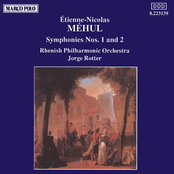
Mehul: Symphonies Nos. 1 and 2
▥
Méhul: Overtures
▥
Méhul: Symphonien Nr. 3, 4 und 5 "Unvollendete"
▥
Mehul, E.-N.: Irato, Ou L'Emporte (L') [Opera]
Méhul : Symphonies Nos 1 & 2 (Apex)
▥
Le Chant du Depart