Loading details…
Album
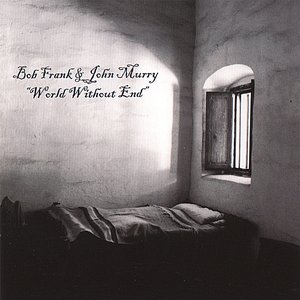
World Without End
Bob Frank and John Murry →573 listeners5,863 plays
murder balladdeath countrythe name gameas years go bydark waltz
about this album
Bob Frank renewed his musical career in 2001 with A Little Gest of Robin Hood, a modern adaptation of an epic poem about the famous outlaw, released on his own Bowstring Records label. Frank has put out several records since, and with World Without End he returns to historical work and accounts of criminal activity, this time of a less heroic sort. Alternating vocals with John Murry, who also co-wrote all the songs, Frank sings of a series of murders, murderers, and victims. Most or all of them seem to be real people from the 18th to the 20th century, and they range from lynched African-Americans ("Jesse Washington, 1916") to adulterous women bricked up in chimneys ("Madeline, 1796"). Murry has a more slurred and slippery voice, unlike the more distinctly spoken Frank, making his songs all the more mysterious as his singing sometimes melds with the musical arrangements, which often include a droning electric guitar. Keeping to the folk tradition of the murder ballad even on these newly written songs, the singer/songwriters offer few if any excuses for the violent behavior of their characters. "Nobody knows why Bubba Rose killed his boss," Frank sings in "Bubba Rose, 1961." But he did, and Frank goes on to tell us how. One may think of the album as a kind of musical version of a Quentin Tarantino movie, and there may be stories here that he and other filmmakers could adapt. For Frank and Murry, the songs represent the renewal of folk music's darkest genre. User-contributed te
tracks
14:3224:1332:5843:0753:3964:3975:1183:5694:12106:22
Little Wiley Harpe, 1803
Bob Frank and John Murry
Joaquin Murietta, 1853
Bob Frank and John Murry
Tupelo, Mississippi, 1936
Bob Frank and John Murry
Bubba Rose, 1961
Bob Frank and John Murry
Madeline, 1796
Bob Frank and John Murry
John Willis, 1844
Bob Frank and John Murry
Jesse Washington, 1916
Bob Frank and John Murry
Kid Curry, 1904
Bob Frank and John Murry
Boss Weatherford, 1933
Bob Frank and John Murry
Doc Cunningham, 1868
Bob Frank and John Murry