Loading details…
Album
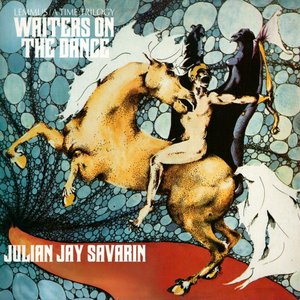
Waiters on the Dance
Julian Jay Savarin →3,129 listeners30,701 plays
1971psychedelic rock1971 albumsprog rockprogressive rock
about this album
The brainchild of this musical project is Julian Savarin. He was born in Dominica but moved with his family to Britain in the early Sixties. He was a writer and a keyboard player and longing to fullfill his musical ideas. Julian recruited his own band with John Dover on bass, Del Watkins on guitar, Jack Drummond on drums and Cathy Pruden on vocals. They started rehearsing and gigging round London as Julian’s Treatment. In june ’70 the label Youngblood released their first album “A Time Before This”. Two years later Julian was approached by Birth records to make a new album. Only bass player John Dover came from the old line-up, other musicians of Julian’s new band were Nigel Jenkins (guitar), Roger Odell (drums) and Jo Meek (vocals). And in ’73 the second album “Waiters On The Dance” came out, credited by Julian J. Savarin (As a writer, Julian Savarin is best known for his science fiction trilogy Lemmus: A Time Odyssey, which also serves as the basis for the two concept albums by the musical group of Julian's Treatment.). The music on this second album sounds very dated and relatively simple but the atmospheres are often very compelling, due to the warm and powerful voice of Jo Meek (with echoes from Annie Haslam but with more emotion), the omnipresent floods of Hammond organ, some majestic flute - and violin Mellotron drops, fiery guitar play and a fluent rhythm-section. The album contains six compositions, all are on the compilation A Time Before This .. Plus except the t
why this is interesting
# Waiters on the Dance This album merits attention for its genuinely experimental approach to progressive rock during the early 1970s. Savarin, drawing on his Caribbean heritage and literary sensibility, crafted something that resists easy categorization—neither purely jazz-fusion nor straightforward prog, but a curious hybrid that privileges melodic sophistication and compositional ambition. The ensemble interplay between Dover's bass, Watkins's guitar, and Drummond's drumming creates intricate rhythmic textures while Pruden's vocals navigate complex arrangements with interpretive grace. What distinguishes the work is its intellectual curiosity: Savarin seems genuinely interested in exploring how disparate musical vocabularies might