Loading details…
about this album
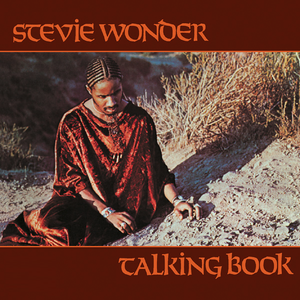
After releasing two "head" records during 1970-71, Stevie Wonder expanded his compositional palate with 1972's Talking Book to include societal ills as well as tender love songs, and so recorded the first smash album of his career. What had been hinted at on the intriguing project Music of My Mind was here focused into a laser beam of tight songwriting, warm electronic arrangements, and ebullient performances -- altogether the most realistic vision of musical personality ever put to wax, beginning with a disarmingly simple love song, "You Are the Sunshine of My Life" (but of course, it's only the composition that's simple). Stevie's not always singing a tender ballad here -- in fact, he flits from contentment to mistrust to promise to heartbreak within the course of the first four songs -- but he never fails to render each song in the most vivid colors. In stark contrast to his early songs, which were clever but often relied on the Motown template of romantic metaphor, with Talking Book it became clear Stevie Wonder was beginning to speak his mind and use personal history for material (just as Marvin Gaye had with the social protest of 1971's What's Going On). The lyrics became less convoluted, while the emotional power gained in intensity. "You and I" and the glorious closer "I Believe (When I Fall in Love It Will Be Forever)" subtly illustrate that the conception of love can be stronger than the reality, while "Tuesday Heartbreak" speaks simply but powerfully: "I wanna be w
tracks
12:5726:5034:3743:0254:5664:2774:2183:2594:45104:48
You Are the Sunshine of My Life
Stevie Wonder
Maybe Your Baby
Stevie Wonder
You and I
Stevie Wonder
Tuesday Heartbreak
Stevie Wonder
You've Got It Bad Girl
Stevie Wonder
Superstition
Stevie Wonder
Big Brother
Stevie Wonder
Blame It on the Sun
Stevie Wonder
Lookin' for Another Pure Love
Stevie Wonder
I Believe (When I Fall in Love It Will Be Forever)
Stevie Wonder