Loading details…
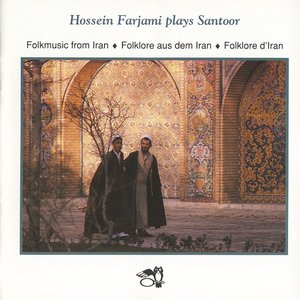
Album
Plays Santoor
Hossein Farjami →26 listeners321 plays
santursantouriranian traditionalpersian traditionaldastgah
about this album
In this production Hossein Farjami plays four different Dastgah-ha: Shur, Bayat-e-tork, Esfahan and Homayun. Each one of them is divided into three parts being improvisation, introduction (pish-dar-amad) and rhythmic improvisation (chahar-mesrab). The dastgah of shur also contains "reng", arhythmic melody which in this case is combined with the chahar-mesrab. All scales shown are those used by Mr. Farjami in this recording. 1. THE DASTGAH SHUR (9:25) Shur is the Dastgah (organization) with far the greatest number of Gusheh-Ha (pieces-of-music), as well as being the most popular one. Shur might even be considered as a kind of basic Iranian^mode since it is parent to four secondary Dastgah and is related through modulatory Gusheh-Ha.to several more. The name shur reflects its popularity, for it means "spicy" or "clever". The scale of shur is similar either to the western natural minor scale or to the Phrygian mode 2. THE NAGMEH BAYATE-E-TORK Bayat-e-tork or Bayat-e-zand refers to the family of an eighteenth-century monarch, Karim Khan Zand. The scale of Bayat-e-tork is customarily written from the third degree of shur. 3. THE NAGMEH ESFAHAN (13:56) Esfahan was the capital of Iran during the Safavid period (16.-18. centuries) and is architecturally the most beautiful city in Iran. The name Esfahan is found in lists of Dastgah-ha used during the Medieval period in Iran. The present scale of Esfahan, derived from the fourth degree of its parent Dastgah, Homayun. Mr. Farjami us
more from Hossein Farjami
20 Best Of Asia, Africa & Australia
Farjami, Hossein: The Art of the Santoor from Iran
Hossein Farjami: the Road To Esfahan - the Art of the Santoor From Iran
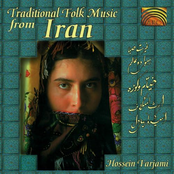
Traditional Folk Music from Iran
▥
Music of the Middle East - Iran, Syria, Iraq, Egypt, Turkey, Armenia, Lebanon à
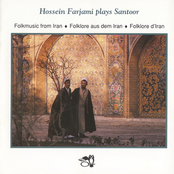
plays Santoor - Folkmusic from Iran