Loading details…
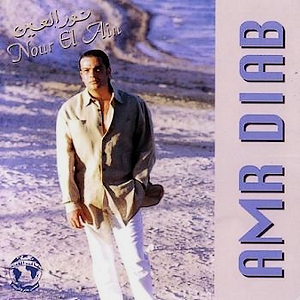
about this album
Nour El Ain In 1996, Nour El Ain (Light of The Eye – Sight) was released, becoming a tremendous success not only in the Middle East but throughout the entire world. The song was composed by Nasser el-Mizdawi, lyrics were written by Ahmed Sheta and it was arranged by Hameed Elshaery. The title track, and its English version "Habibi", was an international phenomenon, becoming a massive crossover hit in countries such as Pakistan, India, Iran, Afghanistan performed by Sangeeth Wickremasinghe) and Malaysia (Malay version sung by Datuk Sharifah Aini).In a style reminiscent of the Aldo (musician) Franco-Arabic style, the song was remixed by several top European arrangers and has become a big pull on the dance floors of Europe. The video clip, also produced by Alam El Phan for the song "Nour El Ain", was one of the most lavish and expensive productions in the field of Egyptian song, and set a new standard for his contemporaries to aspire to. Nour El Ain has become the best selling album ever released by an Arabic artist. In 1997, Amr Diab won three Awards at the Annual Arabic Festival (for Best Video, Best Song and Artist of the Year). In the following year, he received a Triple Platinum Award for the sales of Nour El Ain, and received a World Music Award in Monaco on 6 May 1998, under the patronage of H.S.H. Albert II, Prince of Monaco, and attended by such International luminaries as Gloria Estefan, Céline Dion, Mariah Carey, The Backstreet Boys, Steven Segal and others. This aw
why this is interesting
# On Noor Al Ain This 1996 release marks a pivotal moment when Arabic pop transcended regional boundaries through careful craft rather than dilution. The title track exemplifies how traditional melodic sensibilities—rooted in Arab musical vocabulary—could meet contemporary production values and rhythmic sensibilities. What distinguishes this work is its refusal to choose between authenticity and accessibility; instead, it demonstrates how cross-cultural appeal emerges from confident artistic vision. The album's international success wasn't accidental but reflected genuine compositional merit and arrangement sophistication. For listeners curious about how global music circulation occurred before streaming platforms, this album reveals the mechanisms of organic cultural exchange and the enduring power of melody itself.
you might also explore
▤Books
▧Games
▣Movies
▦TV