Loading details…
Album
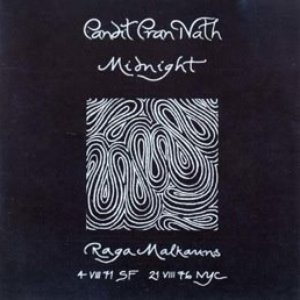
Midnight
Pandit Pran Nath →416 listeners1,760 plays
indian classicaldronevelvetslamonte youngraga
about this album
"It isn’t just the quality of the drone that distinguishes Pandit Pran Nath’s performance of the Malkauns, recorded at midnight in a studio in Soho in 1976. What really stands out in this recording — identified by his former student Henry Flynt as one of the two or three most important ever made — is his voice, stony and austere, with a subterranean intensity. When he hits the tonic note — what in Indian music is called the shadaja — and then slides it slowly, microtonally, downward, you can feel it inside your chest, an impossible emotion somewhere between awe, erotic desire, and annihilation. Some ragas are light-footed maidens dancing through springtime, at play on swings in the flowered groves along the Yamuna riverbank; Pandit Pran Nath’s are cremation grounds, the blue-black color of smoke rising softly from the smoldering log of a sadhu’s fire, the moon on the mountainside." - Alexander Keefe. "Lord of the Drone: Pandit Pran Nath and the American Underground." Biduun 20. User-contributed text is available under the Creative Commons By-SA License; additional terms may apply.