Loading details…
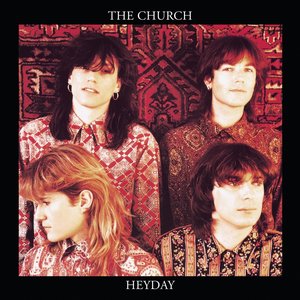
about this album
Heyday is the fourth studio album by Australian alternative rock band The Church, released in November 1985 in Australia and on January 28, 1986 in the U.S. It was recorded in winter/spring 1985 at Studios 301 in Sydney, Australia, produced by Peter Walsh. The album genres include alternative rock, neo-psychedelia, psychedelic rock, and dream pop. The album was the first by The Church to chart in the United States, reaching #148. It marked a shift: this album saw more group compositions than before. Steve Kilbey said they wanted to capture the energy they had on stage, which had surpassed what they’d been recording. As a feature of the album, Steve’s vocals had visibly changed—after a break from performing, possible abstention from drugs, or hours of yoga—as noted by observers. His voice was more relaxed, warm, and dynamic. Along with him singing leads, he also recorded multiple harmony parts, sometimes singing in a higher octave than his usual register. Musically, Heyday reduced the heavy use of keyboards from earlier albums, but added strings and brass. Guitar interplay was emphasized; solos were minimal. Some critics compared its sound to an electrified version of Love’s album Forever Changes. When touring in April 1986 to support Heyday, tensions led to guitarist Marty Willson-Piper quitting mid-tour. The Church performed as a three-piece in Hamburg, Germany, on 10 July, but Willson-Piper returned a week later after Steve Kilbey agreed future material would in