Loading details…
about this album
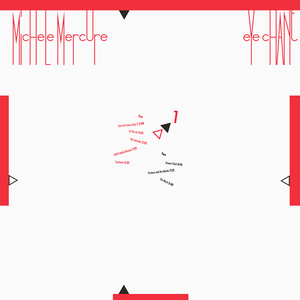
You can see the sounds her voice makes. The literal depiction of this, a photograph of Michele Mercure with an eyeball in her mouth, is removed in the updated album art. The original graphic elements are left to suspend, speak, and sing across time. In the absence of the decade-specific portraits, the redesigned edition is dislocated from a particular or linear history. Our initial point of encounter is artifactual; a trace in place of a scar. Accordingly, Michele’s true image and body is sound. Eye Chant, as a whole, offers meditations of sound as material. Her instruments are voice and synthesizer, the former following the machine’s lead and language of patterns. Machine sounds become abstract words. The human voice is pulled apart, dislodged from context; a tactile, textured quality appears to reconfigure the body and machine presently or permanently. The natural and the mechanical elements of Eye Chant commingle with the ease of a musician well-versed in the social-material entanglements of life. Like the lacework referenced in one track, Mercure’s record alludes to interconnections and their unraveling. Her married name formerly attached to Eye Chant has been shed for this iteration. As her electronic kin, Eliane Radigue and Suzanne Ciani would attest, it’s all raw material for the musician to give form. Donna Haraway and Lucy Suchman may have been listening. Michele offers a tender mechanics to attune to. Atmospheres expand and contract within a song, sometimes reapp