Loading details…
Album
Emperor Tomato Ketchup
Stereolab →273,055 listeners4,234,742 plays
post-rockelectronicindiefrenchindie pop
about this album
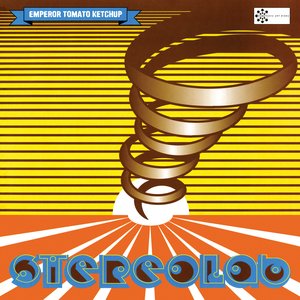
Emperor Tomato Ketchup is the fourth studio album by English-French rock band Stereolab. It was released on 18 March 1996 and was issued by Duophonic Records and Elektra Records. The album is named after the 1971 experimental film Emperor Tomato Ketchup by Japanese author and director Shūji Terayama. Emperor Tomato Ketchup was released on 18 March 1996 in the United Kingdom by Duophonic Records, and on 9 April 1996 in the United States by Elektra Records. The artwork for the album was inspired by the LP cover sleeve of a 1964 recording of composer Béla Bartók's Concerto for Orchestra by the Bamberg Symphony conducted by Heinrich Hollreiser. Preceding the album's release, the track "Cybele's Reverie" was issued as a single (on 7" vinyl) and as an EP (on CD and 10" vinyl) on 19 February 1996. A second single, "Metronomic Underground", was released on 2 December 1996. "The Noise of Carpet" was also promoted as a single to radio outlets in the United States. AllMusic writer Heather Phares cites Emperor Tomato Ketchup as "Stereolab's greatest success to date". In the US, the album was especially successful on college radio, and by August 1997, the album had sold over 46,000 units in the country, according to Nielsen SoundScan. A remastered and expanded edition of Emperor Tomato Ketchup was released by Duophonic and Warp on 13 September 2019. User-contributed text is available under the Creative Commons By-SA License; additional terms may apply.
tracks
110:2123:1433:5144:0552:2965:4273:0585:5993:51103:44113:48123:53134:32
Metronomic Underground
Stereolab
Cybele's Reverie
Stereolab
Percolator
Stereolab
Les Yper-sound
Stereolab
Spark Plug
Stereolab
OLV 26
Stereolab
The Noise of Carpet
Stereolab
Tomorrow Is Already Here
Stereolab
Emperor Tomato Ketchup
Stereolab
Monstre Sacre
Stereolab
Motoroller Scalatron
Stereolab
Slow Fast Hazel
Stereolab
Anonymous Collective
Stereolab
![Refried Ectoplasm [Switched On Volume 2]](https://lastfm.freetls.fastly.net/i/u/174s/5f455d3d2c1802f88199f2e10079b7ca.png)