Loading details…
Album
Domingo
Caetano Veloso →70,356 listeners891,797 plays
bossa novabrasilmpbfemale vocalistscaetano veloso
about this album
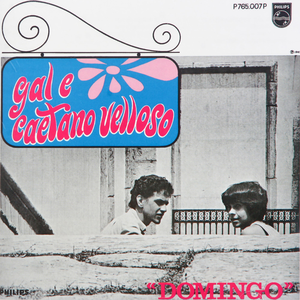
Released in the fragile quiet of 1967, Domingo serves as a liminal masterwork, capturing the soft, humid breath of Bossa Nova before the psychedelic storm of Tropicalismo fundamentally altered the Brazilian sonic landscape. It is an album of textures and shadows, recorded at the Philips studios in Rio de Janeiro when Caetano Veloso and Gal Costa were still two young, relatively unknown Bahianos navigating the weight of João Gilberto’s legacy. The record does not demand attention through volume; instead, it invites the listener into a specific sensory space—a Sunday afternoon defined by that peculiar, heavy boredom where time seems to dilate and the light shifts slowly across a white-washed wall. The production, helmed by Dori Caymmi, is an exercise in compositional restraint that resonates deeply with those who appreciate the tactile grain of a recording. Gal’s voice, then still performing under her birth name Maria da Graça, possesses a translucent, almost physical purity, devoid of the rock-and-roll grit she would later adopt. It is a voice of cool water and silk, navigating Caetano’s early poetic forays into existential longing. There is a curious technical intimacy to the arrangements—the guitar strings are felt as much as they are heard, and the orchestral flourishes are kept at a distance, like a memory of a film score playing in a neighboring room. Interestingly, the album’s title and its pervasive melancholy were not merely aesthetic choices but reflections of a liv
tracks
12:2221:5932:4343:1251:2561:3373:1081:509103:23114:03122:48
Coração Vagabundo
Gal Costa
Onde Eu Nasci Passa Um Rio
Caetano Veloso
Avarandado
Gal Costa
Um Dia
Caetano Veloso
Domingo
Caetano Veloso
Nenhuma Dor
Caetano Veloso
Candeias
Gal Costa
Remelexo
Caetano Veloso
Minha Senhora
Gal Costa
Quem Me Dera
Caetano Veloso
Maria Joana
Gal Costa
Zabele
Gal Costa