Loading details…
about this album
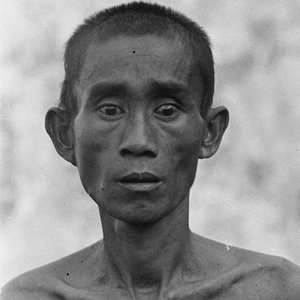
In Kasimyn's own words, the phrase "BUNYI BUNYI TUMBAL" signifies a "Synthetic Feeling for Anonymous Sacrifice," encompassing the emotions born out of a deep dive into the Indonesian war archives. These archives include a trove of photographs documenting the era of Dutch rule, captured through the lens of the colonisers themselves. It is from this point of departure that the project HULUBALANG was born. HULUBALANG's gaze is drawn to the peripheral figures populating these historical records. These secondary characters, devoid of individual significance, bear no names, receive no recognition, and serve as props in the broader narrative of history. Simultaneously, they become indispensable instruments in acquiring "lessons learned" from the perspectives of both the victors and the vanquished. Within this framework, the notion of TUMBAL, the non-belligerent "sacrifice," assumes a weight surpassing its translation. TUMBAL neither acts as a victim nor martyrs itself for its cause. It hauntingly reminds us of the systemic curse perpetually engendering disillusionment. A noteworthy aspect is the recent apology by the Dutch government for the atrocities committed during their rule in Indonesia. However, copyright constraints limit access to numerous photographs from this period, especially those depicting violence, hindering public scrutiny. BUNYI BUNYI TUMBAL transcends politics—it is a personal act of catharsis stemming from a long lineage of anger. It stands as a tribute to a v
tracks
13:1123:3433:5343:3852:1863:0573:4383:0993:1310110:33123:45133:12143:45
Piso
Hulubalang
Cerca
Hulubalang
Kemaut
Hulubalang
Malasa
Hulubalang
Sayat
Hulubalang
Liang
Hulubalang
Bucur
Hulubalang
Hitam
Hulubalang
Tungkai
Hulubalang
Budakkawan
HULUBALANG [feat. SaintMary]
Gendang Ria
Hulubalang
Cakar
Hulubalang
Sengatan
Hulubalang
Sungsut
Hulubalang