Loading details…
Album
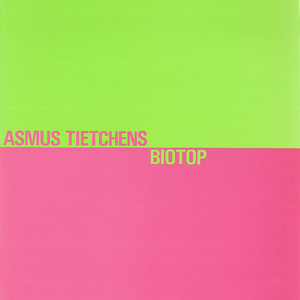
Biotop
Asmus Tietchens →3,257 listeners142,429 plays
minimal synthexperimentalsynth popelectronicavant-garde
about this album
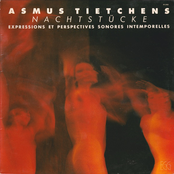
In retrospect, we might suspect that Asmus Tietchens was deliberately leading us up the garden path with the discordant pseudo-pop of his early musical productions. Four albums between 1981-1983 and a handful of individual pieces comprise the "Zeitzeichen" (time signal) phase which, in the words of their creator, was characterized by the implementation of "rhythmic-harmonic set pieces and gaudy record sleeves." These albums do indeed feature elements of the noisy-abstract structures which Tietchens would be in a position to release from 1984 onwards in a more industrial setting, figuring prominently in his main body of work. Yet to understand "Zeitzeichen" as a period of transition, a mere curiosity, would be wide of the mark. Günter Körber released the Biotop, Spät-Europa, In die Nacht, and Litia albums on Sky Records. His label specialized in contemporary electronic music, often cosmic or Kraut-like, but also offered a platform to un-agitated cryptic experiments. Tietchens was well-acquainted with the Sky program, both as a listener and through personal friendships -- with Dieter Moebius, Hans-Joachim Roedelius, and Michael Rother; hence, establishing contact presented little difficulty. Sixteen tracks had been produced for Biotop but, in 1980, saw no genuine prospect of a release, so signing to Sky was a logical move. The Sky series is markedly different, surprisingly so, from the debut album Nachtstücke, rife with "soft rhythms and harmonic bliss," as Tietchens acknowledg
tracks
12:3422:1432:1143:5952:4162:2372:3382:2492:49102:05112:45122:03132:06143:31152:31163:33
In die Zukunft
Asmus Tietchens
Miss Ann Trope
Asmus Tietchens
Die elektrische Horde
Asmus Tietchens
Räuschlinge
Asmus Tietchens
Geisel des Monats
Asmus Tietchens
Blutmund
Asmus Tietchens
Cretin statique
Asmus Tietchens
Gasmaske in Blau
Asmus Tietchens
Moderne Arroganz
Asmus Tietchens
Stressmen
Asmus Tietchens
Tango Fellatino
Asmus Tietchens
Sauberland
Asmus Tietchens
Trümmerköpfe
Asmus Tietchens
Sekundentanz
Asmus Tietchens
Träumchen am Fenster
Asmus Tietchens
Biotop
Asmus Tietchens