Loading details…
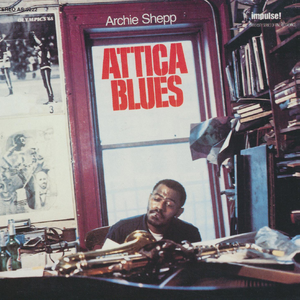
about this album
Refining his large-ensemble experiments of 1971, Attica Blues is one of Archie Shepp's most significant post-'60s statements, recorded just several months after authorities ended the Attica prison uprising by massacring 43 inmates and hostages. Perhaps because Shepp's musical interests were changing, Attica Blues isn't the all-out blast of rage one might expect; instead, it's a richly arranged album of mournful, quietly agonized blues and Ellingtonian swing, mixed with a couple of storming funk burners. Of course, Shepp doesn't quite play it straight, bringing his avant-garde sensibilities to both vintage big band and contemporary funk, with little regard for the boundaries separating them all. His soloing on tenor and soprano is typically sharp-edged and modal, and his nasal, slicing tone on soprano is featured quite heavily. The stylishness of the slow numbers is undercut with quivering, faintly unsettling dissonances, and the up-tempo funk cuts recall the way Sly Stone's arrangements ping-ponged many different elements off each other in a gleeful organized chaos. That's especially true on the gospel-inflected title song, a monster of a groove that later became a hit on the acid jazz revival circuit (and stands up to anything recorded by straight-up funk bands of the era). In the same vein, "Blues for Brother George Jackson" sounds like an edgier Isaac Hayes-style blaxploitation soundtrack cut. Vocal ballads are plentiful, and Joe Lee Wilson ("Steam," a song Shepp would ret
tracks
14:4820:1835:0843:1755:1064:0870:3083:4094:22106:12
Attica Blues
Archie Shepp
Invocation: Attica Blues
Archie Shepp
Steam, Part 1
Archie Shepp
Invocation To Mr. Parker
Archie Shepp
Steam, Part 2
Archie Shepp
Blues For Brother George Jackson
Archie Shepp
Invocation: Ballad For A Child
Archie Shepp
Ballad For A Child
Archie Shepp
Good Bye Sweet Pops
Archie Shepp
Quiet Dawn
Archie Shepp