Loading details…
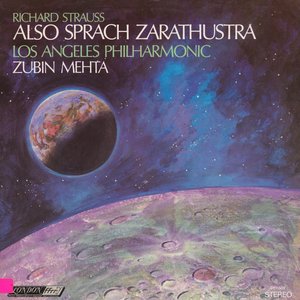
Album
Also Sprach Zarathustra
Richard Strauss →34,697 listeners160,942 plays
classicalrichard strausszarathustraromanticsci-fi
about this album
Also sprach Zarathustra, Op. 30 (Eng. Thus Spake Zarathustra) (About this sound sample (help·info)) is a tone poem by Richard Strauss, composed in 1896 and inspired by Friedrich Nietzsche's philosophical treatise of the same name. The composer conducted its first performance in Frankfurt. A typical performance lasts half an hour. The work has been part of the classical repertoire since its introduction in 1896. The opening fanfare "Sunrise" has become known to the general public due to its use in Stanley Kubrick's 1968 film 2001: A Space Odyssey. Instrumentation * woodwinds: piccolo, 3 flutes (3rd doubling piccolo), 3 oboes, English horn, 3 clarinets in E-flat and B-flat, bass clarinet in B-flat, 3 bassoons, contrabassoon * brass: 6 horns in F, 4 trumpets in C, 3 trombones, 2 tubas * percussion: timpani, bass drum, cymbals, triangle, glockenspiel, bell on low E * keyboard: organ * strings: 2 harps, violins i, ii (16 each), violas (12), cellos (12), double basses (8) (several with low C string). Structure The piece is divided into nine sections played with only three clear breaks. Strauss named the sections after selected chapters in the book: 1. Einleitung (Introduction) 2. Von den Hinterweltlern (Of the Backworldsmen) 3. Von der großen Sehnsucht (Of the Great Longing) 4. Von den Freuden und Leidenschaften (Of the Joys and Passions) 5. Das Grablied (The Grave-Song) 6. Von der Wissenschaft (Of Science) 7. Der Genesende (The Conv
you might also explore
▣Movies
▧Games
▤Books
tracks
more from Richard Strauss
Strauss, R.: Also sprach Zarathustra; Till Eulenspiegel; Don Juan; Salome's Dance Of The Seven Veils
STRAUSS, R: Piano Sonata / 5 Piano Pieces / Stimmungsbilder
STRAUSS, R.: Also Sprach Zarathustra / Salome's Dance
STRAUSS, R.: Don Quixote / Romance for Cello and Orchestra
Ariadne auf Naxos
▥
Der Rosenkavalier (disc 1)