Loading details…
Album
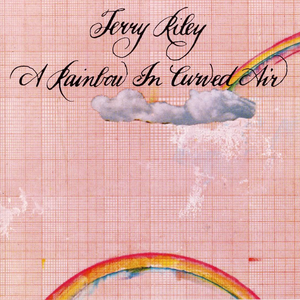
A Rainbow in Curved Air
Terry Riley →39,793 listeners148,370 plays
minimalism1969electroniccontemporary classicalambient
about this album
A Rainbow In Curved Air is the third album by experimental music artist Terry Riley. Through the use of overdubbing, Riley plays all the instruments on the title track: electric organ, 2 electric harpsichords (a Baldwin electric harpsichord & a RMI Rock-Si-Chord), dumbec (or goblet drum), and tambourine. The largely improvisational nature of the work, based on modal scales, owes much to jazz and Hindustani classical music. Some jazz musicians had explored overdubbing techniques before, notably Bill Evans, one of Riley's piano "heroes", on his classic album Conversations with Myself from four years earlier, with its three piano tracks; but Riley uses a far wider range of instruments and colors. Although continuous in form, A Rainbow in Curved Air can be seen as having three distinct sections or "movements," like a classical sonata or concerto. The first "fast" section gives way to a more contemplative "slow movement" at 6:39. Then, the final more rhythmic section begins at 11:41, dominated by the dumbec, which creates a parallel to how a tabla enters in the final section of a Hindustani raga. The work then ends abruptly. The combination of the one-man-band overdubbing, electronic instruments, and improvisation made for a unique and influential recording, a defining psychedelic work of the 1960s, enhanced by its cover art and the peace poem that constitutes the liner notes. The companion piece, which constituted the "B" side of the original album, is titled "Poppy Nogood and