Loading details…

about this album
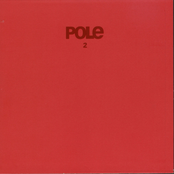
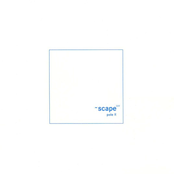
Originally released as three consecutive albums in their own right, it makes sense to treat these releases as a coherent trilogy. A deliberate statement reinforced by the numbering and stringent monochrome cover art. Minimalism as a form of art. A statement not unlike Yves Klein’s blue canvasses. Confronted with one of Klein’s seminal images, a viewer might take it for a mere joke or provocation, but will soon enough one find himself drawn in and devoured by the maelstrom-like expanse of intense colour. Stefan Betke aka Pole’s music can have a similar effect. Here, reductionism and minimalism do not equal austerity, but a sensuous, almost baroque experience – oscillations produced by crackles and bass envelop the body and leave it vibrating. It all started with the analogue Waldorf 4 Pole filter that gave Betke his memorable moniker. Inspired by the defective equipment’s distinctive crackles, Pole took them as a starting point for his equally simple and subtle sound layers.Here, rhythmic textures and warmly pulsing bass lines join in play and, at least from ‘Pole 2’, experience a slow shift towards Minimal Dub. Pole’s music has a unique way of oscillating between euphony and avant-guarde, between pop and experiment. While many of his electronic avant-garde peers swore off all danceable elements during the latter half of the 1990s, Pole decided to walk the edge, championing both radical reductionism and groovy, almost psychedelic dream states. Tracks like ‘Kirschenessen’ or